
Tibetan Medicine Diet and Lifestyle Counselor Online Program
Cohorts starting in January & September 2026
Study Tibetan Medicine and become a Diet & Lifestyle Counselor
This program was born from our 4-year Tibetan Medicine Program, and can be considered the first part of the complete training. We decided to break the 4-year training into two parts to give you the opportunity to start your practice as a TM Diet & Lifestyle Counselor after 1.5 years of studies. Those who wish, can later continue their studies and receive the full Tibetan Medicine training.
This program is for you if you would like to:
Study traditional Tibetan Medicine as it is taught in schools in Tibet and India
Understand foundational principles, anatomy & physiology, and the nature of disease according to Tibetan Medicine
Know how to assess elemental constitution for yourself and others
Understand the theory and application of therapeutic diet & lifestyle for yourself and others
Diagnose general elemental states of imbalance through external observations
Learn & practice Tibetan self-massage
Learn the basics of reading, writing, and speaking in Tibetan
Learn to help people through diet & lifestyle choices – a powerful and ancient tool to stay in balance and good health!
Overview
Gyud Zhi
Supplementary Topics
Tibetan Medicine
Approach
Structure
Learn the basic theory and practice of traditional Tibetan Medicine and come away with the skills to assess constitution and tailor a therapeutic diet and lifestyle for yourself, your family and your clients.
This course is offered as a hybrid comprising three semesters worth of online work along with three intensives of 10 days.
The curriculum is based on the རྒྱུད་བཞིའི་ rGyud bZhi’i, the four primary Tibetan Healing Science Texts, which are used in all traditional schools of Tibetan Medicine.
This course covers the following topics from the traditional texts of Tibetan Medicine: the core outline of the whole study of Tibetan Medicine, Tibetan Anatomy and Physiology, Tibetan Pharmacology, Etiology of Disease, Therapeutic Diet and Lifestyle, Introduction to External Therapies, Basic Diagnosis and Methods of Treatment.
Supplementary topics include Tibetan Language, Tibetan Self-Massage, Simple Food and Kitchen Medicine Preparation, Creating a Treatment Plan for Clients, and more.
With a history going back over 2,500 years, traditional Tibetan medicine is one of the oldest continuously practiced healing systems on Earth. Regarded as science, art, and philosophy, Tibetan Medicine is an ancient form of holistic healthcare indigenous to the Tibetan people, and as such it integrates the core Buddhist principles of altruism, karma, and ethics. Over thousands of years this native Tibetan science synthesized with accumulated knowledge from China, Persia, India, and Greece. Since this time it has been practiced continuously throughout Tibet, the Himalayan regions, India, Mongolia, and Siberia, as well as in the Western world wherever Tibetans live in exile.
Each semester combines a bipartite approach to the study of the Tibetan Medicine tradition, which includes core foundation studies based on the topics of the Four Tantras and clinical practicums.
TM Diet & Lifestyle Counselor program offers three consecutive semesters. There are no electives or part/time study options in the Tibetan Medicine program and students are expected to participate in all aspects covering each semester’s topics.
All topics, number of hours per topic, and sequence of course topics are subject to change due to the needs of each particular class and faculty.
About Your Teacher
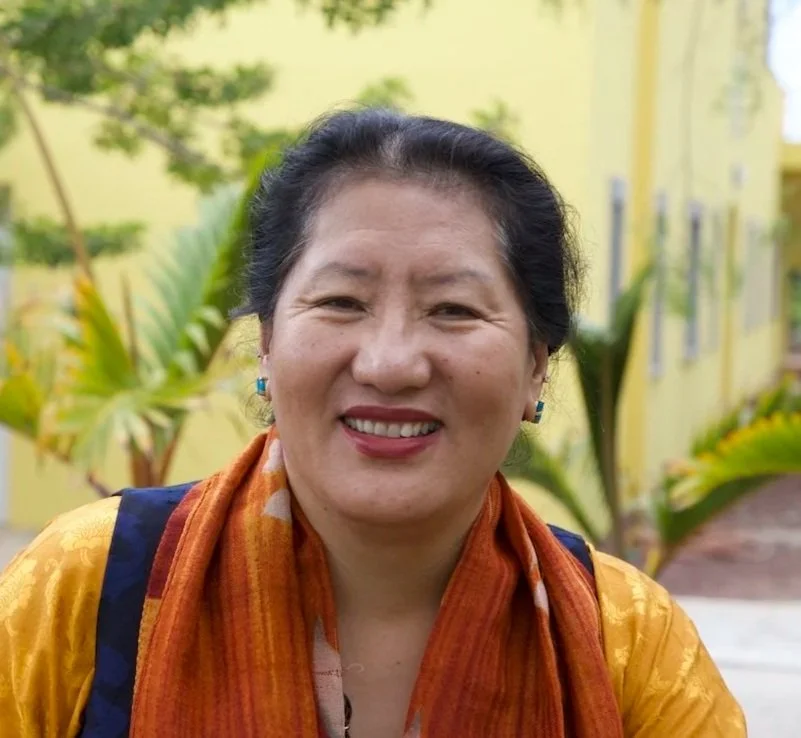
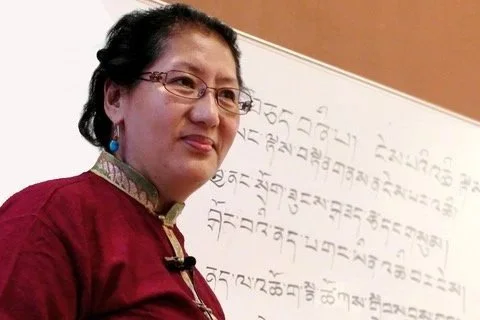
Dr. Cuowangmu Ping has over 30 years of experience in teaching and practicing Tibetan Medicine.
She has studied and worked with many celebrated Teachers and Masters of Tibetan Medicine, astrology, and Buddhist Dharma studies. Dr. Ping has taught all around the world at many conferences and events pertaining to Tibetan Medicine and healthcare.
She has co-founded the Shang Shung School of Tibetan Medicine with locations in United States of America, Spain and more.
She has taught globally at many conferences and events pertaining to Tibetan Medicine and healthcare.
-
First Semester
Core Foundation Studies
Tibetan Medicine Root Tantra
Tibetan Anatomy & Physiology
Etiology of IllnessComplementary Studies
Tibetan Language StudiesSecond Semester
Core Foundation Studies
Tibetan Pharmacology
Preventative MedicineComplementary Studies
Tibetan Language StudiesThird Semester
Core Foundation Studies
Preventative Medicine
DiagnosticsComplementary Studies
Tibetan Language StudiesPracticums
There are 3 Practical Intensives that take place over the distance learning program’s course of study. The duration of each intensive is approximately 10 days. Two intensives are held online, and the third is required to be in-person in Tallinn, Estonia. All 3 intensives are integral to the program as they comprise instructions that either involve hands-on training or are best delivered in person. -
The Core Foundation Studies include the major topics presented in the Four Tantras (Gyud Zhi), which form the theoretical basis for the practice of Tibetan Medicine. Each semester, several of these topics will be introduced. Students gradually build their knowledge base through the systematic examination and integration of the material as it has been taught for centuries.
Tibetan Medicine Root Tantra
For centuries the Root Tantra has been the essential foundation for all Tibetan Medicine studies. This text clearly introduces all the major topics of the traditional Tibetan Science of Healing. By learning the essential topics covered in the Root Tantra, students are able to fully prepare to integrate the knowledge of each area in greater depth as these topics are presented in a systematic order throughout their course of study.
Tibetan Anatomy & Physiology
The study of Tibetan Anatomy and Physiology covers the formation of the body from conception to death. Students will be introduced systematically to this entire sequence from the initial stages of conception, how the body exists during one’s life, to how it is harmed and perishes in the end. The principles of human conception, stages of development, the shape and interconnection of normal components of the body, how it functions, and how the body dissolves at death the secondary causes, the principles of the appearance of longevity, are among the aspects covered in this course.
Etiology of Illness and Causes of Diseases
This topic of study will show the complete stages of the development of illness in general, i.e. the characteristics of the cause and condition of the producing illness in the constitution of a human being; the way illnesses begin, the nature of becoming an illness, the indications of a manifesting illness, and the categorization of types of disease.
Preventative Medicine
“Living for a long while without illness” is the knowledge of how to protect wellbeing and benefit a person’s life by preventing the occurrence and development of illness in a person’s constitution. Preventative medicine includes the first two of the four principle treatments in Tibetan Medicine, diet and behavior, the last two being medicine and external therapies. These are key factors in the promotion of health. Restoring the essence or “bcud len” will also be introduced during this topic which is part of the topic of Fertility Treatment as well as Geriatrics.
Tibetan Pharmacology
Pharmacology is the training and introduction of administering medicinal compounds for the human body, the third of the four principle treatments of Tibetan Medicine. Covering the basic principles of preparing medicinal substances according to a typology of taste and nature. The first three chapters of Tibetan Pharmcopeia are covered in this section.
Diagnostics
Students will be introduced to the practical theory of investigating and examining the basis of an illness through the three primary components of diagnosis in the Tibetan tradition: observation through touch including pulse analysis; observation through sight including urinalysis; and observation through listening including diagnostic interview.
Methods of Treatment
This topic covers treatment protocols, therapeutic principles and treatment methods for different classes and stages of illness.
-
Tibetan Language
Although the program is presented entirely in English, students need to acquire basic reading, writing, and listening skills in the Tibetan language in order to refer to the huge body of literature on Tibetan medicine, as yet untranslated, as well as the primary texts used in the program. The Tibetan language is unrivaled for its sophisticated and subtle contexts in relating nuances of physical and mental harmony or disharmony.Knowledge of the original language of Tibetan medicine will enable students in the program to better grasp the complex terminology and contextual meanings. Beginning with the basics of the Tibetan alphabet and grammar, by the end of semester three you will be able to understand basic sentence structure and be able to sound out loud Tibetan words and sentences.
Tibetan History and Cultural Studies
In order to fully grasp the magnitude of Tibetan medicine, students need to understand the historical and cultural traditions from which Tibetan medicine arises. Over the course of their studies at the Shang Shung Institute, students will be introduced to the rich oral and historical commentaries associated with the Tibetan Medicine tradition in the form of stories, mythologies, and allegories that have evolved for centuries. This is traditionally considered part of every practitioner of Tibetan Medicine’s training.Practicum Clinical Trainings
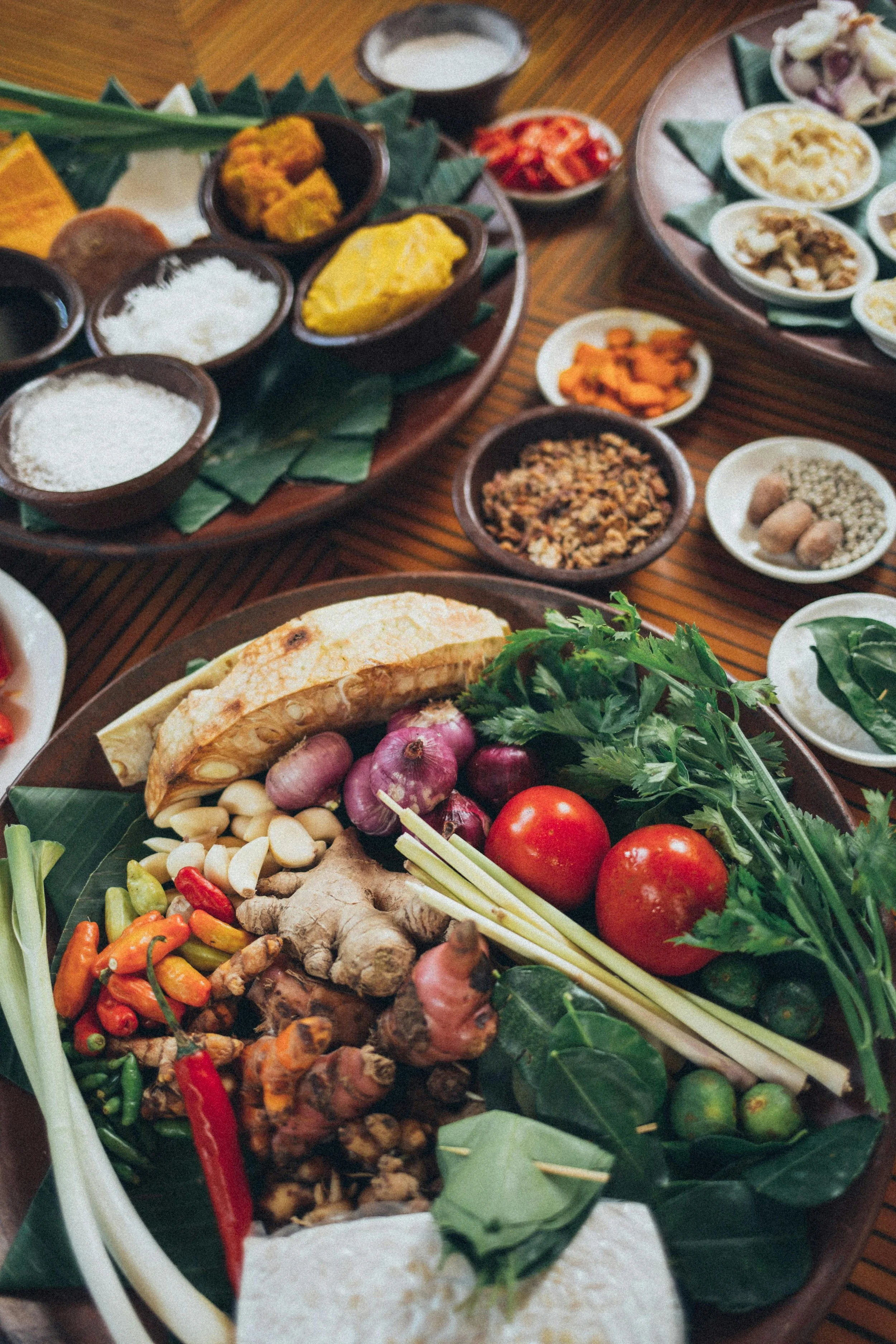
The core foundation studies are complemented by practicums on various topics including experimentation with taste; simple food and kitchen medicine preparation; self-massage; basic introduction to observation for diagnosis; creating a treatment plan for clients; observation of clinical diet and lifestyle consultation; and application between classmates of diet and lifestyle treatment plan. -
Applications are considered on a rolling basis, however, in order to ensure a place, you are advised to submit your application materials and fee ($50) one month prior to the semester since enrollment is limited. The next cohort of the Tibetan Medicine Diet & Lifestyle Counselor Program will start in the beginning of January, 2026. To ask any questions regarding application and/or to apply email katya@shangshung.org.
Enrollment Deposit
25% of tuition is due upon enrollment into the program and will be applied toward the first semester tuition bill.Enrollment Fee
$50.00 per semesterTuition
Tibetan Medicine Diet & Lifestyle Program
Semesters 1 – 3: $2,135 each
Total Tuition: $6,405**2026 rates, subject to change.
School Payment Plan
Candidates may opt into a payment plan of four (4) monthly payments over a semester period.Example Payment Plan Option for Semesters
Payment 1: 25% + $50 Admin fee. Due upon enrollment.
Payment 2: 25% one month after enrollment
Payment 3: 25% two months after enrollment
Payment 4: 25% three months after enrollmentIncidental expenses, like travel, food or lodging, are not included in tuition.
Frequently Asked Questions
Will there be a program coming up soon?
Applications are currently OPEN to join our next cohort of the Tibetan Medicine Diet & Lifestyle Counselor program that will begin in January, 2026.
Is there housing available during the intensives?
Housing is the responsibility of the student, but we can help orient you to the local area.
Is Tibetan language fluency required for any of the programs?
While fluency in Tibetan is not required, we do recommend that students study and increase their proficiency in the precious Tibetan language in order to continue their studies and access additional texts in the field.
How does the distance learning work and how is the program presented online?
The distance learning is through an online course platform. It consists of videos, texts, quizzes, and exams that can be accessed through the platform. Students also submit homework and other materials through the platform. Once enrolled, students are given a private login and access to the materials for their particular level of study. Good access to the internet is important for online study.
Are student visas available?
We do not participate in any programs that would provide student visas at this time.
Where is the program located?
The majority of the program can be done from anywhere with an internet connection. Once a year students must travel to Tallinn, Estonia for approximately 10 days at a time for onsite intensives.